


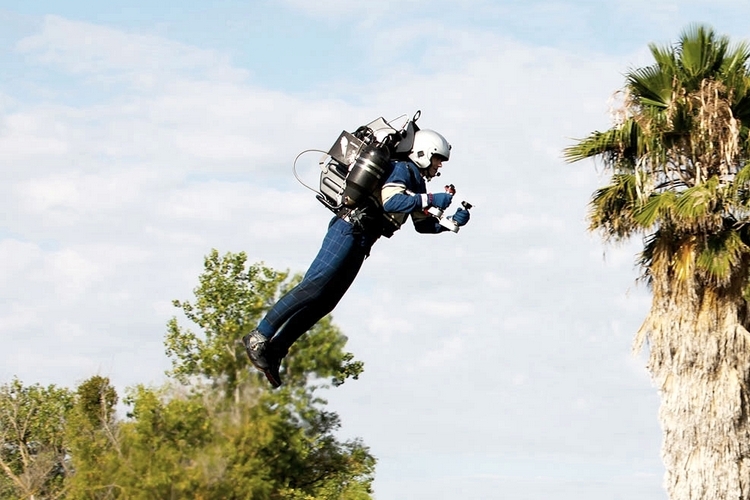

Airwolf 3D and JetPack Aviation have joined forces to create a number 3D-printed JetPack components.
According to JetPack Aviation, a JetPack should be able to handle vertical take-off and landing, but it should also be lightweight and compact. The JetPack that the team has created is small enough to fit into the trunk of a car and can carry the pilot thousands of feet into the air.
In fact, testing of the JetPack suggests that it will be able to go as high as 10,000 feet in the air at speeds of more than 100 mph for around 10 minutes, according to JetPack Aviation.
3D printing the JetPack model, called the JB-10, has enabled the team to quickly prototype it, leading to faster development of the technology behind it.
The concept of using 3D printing came after a number of years of designing and testing the earlier model, the JB-9. In fact, to make the JetPack tank, it previously cost as much as $12,000, however, in using an Airwolf 3D printer, that cost was reduced to $400.
Bombardier marked the 40th anniversary of its industry-leading Smart Services cost-per-flight-hour programs, which today support more than 1,500 enrolled aircraft and account for over 11 mil...
Gogo has unveiled its long-term vision for the Galileo connectivity platform at NBAA-BACE 2026, outlining a roadmap designed to enhance and protect customer investments well into the mid-2030s and bey...
Viasat has significantly expanded the capacity of its JetXP in-flight connectivity service across the United States, delivering up to five times more bandwidth for business aviation customers equipped...
Air Baltic Corporation AS , Latvia’s national airline and the leading carrier in the Baltic States, announced that airBaltic and its subsidiaries participating in the voluntary Ch...