


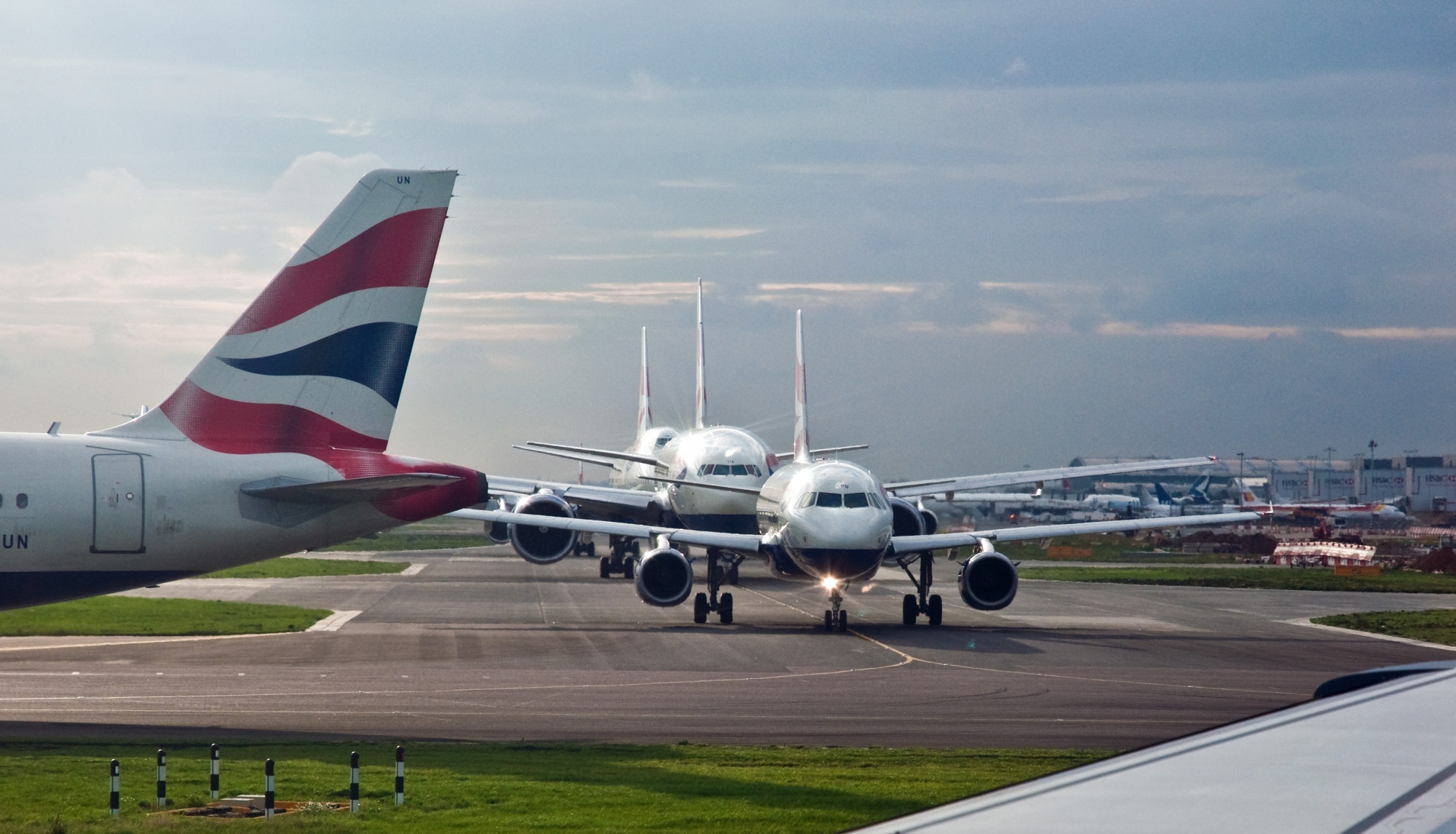

Nobody likes waiting at airports. But one of the only things worse than waiting beside the gate is waiting on the airplane itself, stranded on the runway, and an MIT engineering team has set out to solve that problem. Using a new queuing model, the MIT system can predict how long a plane will have to wait before takeoff so that air traffic controllers can better manage planes on the tarmac, cut down waiting times, and keep runways running efficiently.
The algorithmic model takes into account many factors that influence airport runway congestion, from weather conditions and existing runway traffic to inbound and outbound flight times, local and international delays, and more. The first step of the model takes into account an airplane’s route and estimated time from the gate to takeoff. On top of all these factors and the estimated timing of an individual plane’s departure, the model takes into account the average time it takes a plane to take off once it has joined the runway queue.
Air traffic controllers will be able to see a more realistic projection of the time between an airplane’s gate departure and actual takeoff, permitting them to make better-informed decisions. It may be a better move to keep a plane at the gate for an extra half hour, instead of boarding the plane and sending it into a long runway queue, angering passengers and further backing up tarmac traffic.
MIT’s engineering team is testing the model at airports across the United States. Hamsa Balakrishnan, associate professor of aeronautics, astronautics and engineering systems, started research into the model in 2007 at Newark Liberty International Airport, JFK International Airport, and Philadelphia International Airport. She discovered that airplane passengers traveling during the airports’ busiest travel times sat in runway taxiing patterns for an average of 52 minutes, compared to 14 minutes during less busy hours of the day.
Experienced air traffic controllers could theoretically avoid long queues of airplanes waiting to take off, but in practice, they usually don’t. As soon as an airplane is boarded and ready to depart, it is authorized to join congested patterns of tarmac traffic along with dozens of other planes. This only exacerbates the problem, and the negative impact extends from passengers to airlines and on to the air traffic professionals who are trying to keep the skies safe. The MIT model should be able to cut down on runway congestion, passenger headaches, and dangerous situations in the skies.
Air Baltic Corporation AS , Latvia’s national airline and the leading carrier in the Baltic States, announced that airBaltic and its subsidiaries participating in the voluntary Ch...
The Tennessee Valley Authority is demonstrating the real-world value of the Tecnam P2012 Special Mission Platform (SMP), which has become a vital tool for monitoring and maintaining its...
Bombardier marked the 40th anniversary of its industry-leading Smart Services cost-per-flight-hour programs, which today support more than 1,500 enrolled aircraft and account for over 11 mil...
Oriens Aviation has appointed Narine Melkumjan as Sales Manager for the Netherlands, strengthening its presence in the Dutch market following its designation as Tecnam’s exclusive dealer in the...