


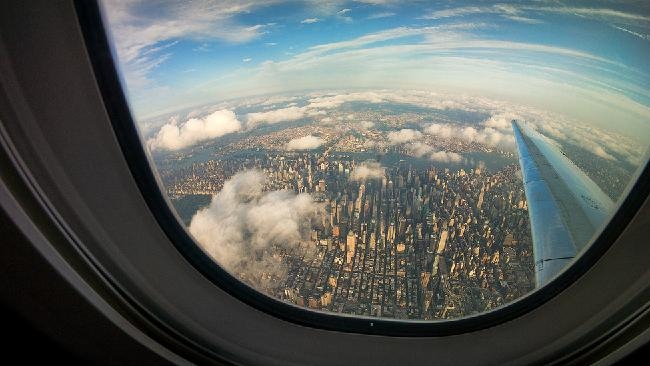
THE thought of holes anywhere in an aeroplane probably doesn’t fill nervous flyers with confidence, but those tiny holes in plane windows actually serve a vital purpose.
For many of us, it may seem odd that planes come with holes in the windows, but the UK Federal Aviation Administration recently spilt the beans as to why.
The Sun reports that it turns out the tiny gaps are used to regulate air pressure inside the plane’s cabin to prevent any potentially deadly depressurising in midair.
When planes climb into the sky, the air pressure outside drops compared to the highly-regulated air pressure inside the cabin.
This extreme difference in pressure heaps physical strain on the windows, which are made from three panes of thick glass.
The hole you can see when you look out of your window seat is actually in the middle pane of glass and is known as a ‘breather’ or a ‘bleed hole.’
The breather works to balance the pressure between the cabin and the air trapped between the window panes.
And that trusty middle pane acts as a backup just in case the outer pane was to break from the pressure.
But the handy holes also serve a second purpose — they release moisture to prevent the windows from frosting or fogging over.
So the next time you’re flying and notice a hole in your window, rest assured that bleeder holes are an essential component of any aeroplane.
Dassault will introduce the fourth-generation EASy IV flight deck on newly built Falcon 2000LXS aircraft, while also making the upgrade available as a retrofit across the entire Falcon 2000 EASy fleet...
Bombardier marked the 40th anniversary of its industry-leading Smart Services cost-per-flight-hour programs, which today support more than 1,500 enrolled aircraft and account for over 11 mil...
Air Baltic Corporation AS , Latvia’s national airline and the leading carrier in the Baltic States, announced that airBaltic and its subsidiaries participating in the voluntary Ch...
Airbus 2026 Cargo Global Market Forecast, unveiled at the Cargo Facts Symposium, predicts that the global fleet of dedicated freighter aircraft will expand by 46%, rising from 2,360 aircraft in 2026 t...