


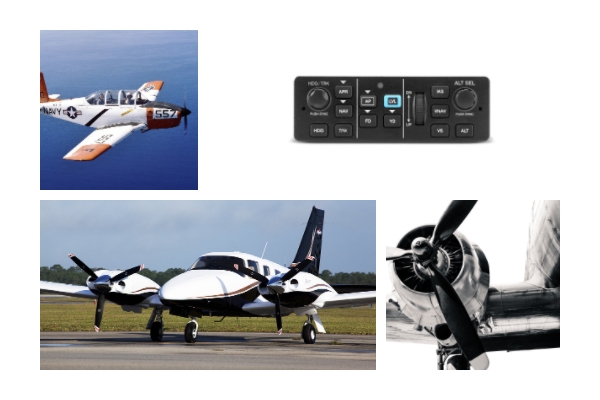
Garmin received FAA Supplemental Type Certification for GFC 500 digital autopilot in additional aircraft to include the Cessna 177/177A Cardinal and the Beechcraft T34A/T34B Series. The STC also covers the Piper Seneca PA-34-200T and PA34-220T II-V models, marking the second certification of the GFC 500 in a twin-engine aircraft. The GFC 500 digital autopilot is intended for light piston aircraft while delivering superior in-flight characteristics, self-monitoring capabilities and minimal maintenance requirements when compared to older generation autopilot systems.
The GFC 500 autopilot uniquely integrates with Garmin’s GI 2751 or G5 electronic flight instruments, a combination of either a standby GI 275 or G5 electronic flight instrument interfaced to a G500 TXi flight display, or a G3X Touch flight display to provide pilots with an economical and modern autopilot solution. The autopilot mode controller contains large, dedicated keys and knobs, as well as a control wheel that allows for easy adjustment to aircraft pitch, airspeed and vertical speed, and a Level Mode (LVL) that returns the aircraft to straight-and-level flight with the push of a dedicated button. In addition, GFC 500-equipped aircraft can take advantage of Garmin Smart Glide, a safety-enhancing tool that helps pilots in an engine power loss event by automating certain tasks and helping to reduce pilot workload1.
The full-featured GFC 500 autopilot provides a long list of existing general aviation aircraft with a simple, lightweight, cost-effective autopilot upgrade path. Incorporating solid state attitude with robust self-monitoring capabilities, the GFC 500 provides superior autopilot performance, greater reliability, and additional safety tools that are similar to those featured on the popular GFC 700 autopilot. In addition to traditional autopilot capabilities, such as altitude hold, vertical speed and heading modes, the GFC 500 also includes altitude preselect, VNAV, underspeed and overspeed protection and more. Pilots can also select, couple and fly various instrument approaches, including GPS, ILS, VOR, LOC and back course approaches when paired with a compatible Garmin GPS navigator.
As a standard feature of the GFC 500, pilots receive Garmin Electronic Stability and Protection, which works to assist the pilot in maintaining the aircraft in a stable flight condition. ESP functions independently of the autopilot and works in the background while the pilot is hand-flying the aircraft to help avoid inadvertent flight attitudes or bank angles by nudging the pilot to return the aircraft to a safe flight attitude.
BPE Air, the aviation company founded and wholly owned by entrepreneur Aldrew Crowe, reported approximately US$90 million in revenue in 2025, marking a major milestone in the growth of its integrated...
Textron Aviation has marked a key milestone in the development of the Cessna Citation CJ4 Gen3 with the rollout of the program’s first production aircraft. The achievement brings the next-g...
Dassault will introduce the fourth-generation EASy IV flight deck on newly built Falcon 2000LXS aircraft, while also making the upgrade available as a retrofit across the entire Falcon 2000 EASy fleet...
The Tennessee Valley Authority is demonstrating the real-world value of the Tecnam P2012 Special Mission Platform (SMP), which has become a vital tool for monitoring and maintaining its...