


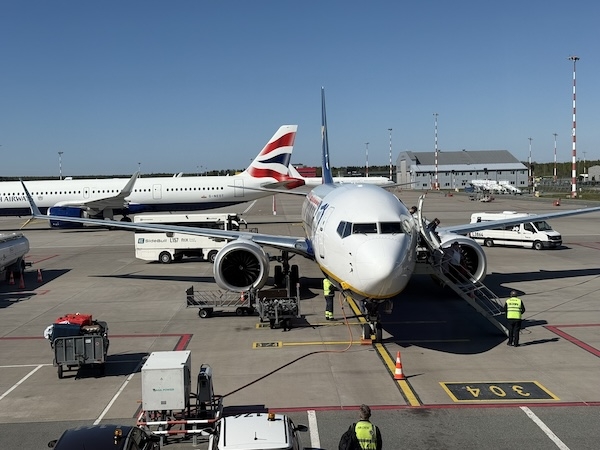
RIX Riga Airport maintained stable operational performance in 2025 and closed the financial year with a profit of EUR 4.2 million, EUR 0.8 million higher than the previous year, according to the company’s audited annual report for 2025. Last year, Riga Airport handled 7.1 million passengers and 63,000 flights, maintaining the previous year’s level of activity. The number of direct passengers increased by 2%, while transfer and transit passenger traffic declined by 6%, mainly due to reduced summer flight programmes by several airlines and changes in carrier route networks.
At the same time, air cargo volumes continued to grow. In 2025, Riga Airport handled more than 20 thousand tonnes of air cargo, which is 7% more than in 2024. The increase was driven by higher cargo volumes on scheduled passenger flights as well as additional cargo flight programmes.
The company’s net turnover reached EUR 80.7 million in 2025, representing a 3.9% increase as compared to 2024. Revenue from aviation services grew to EUR 47.3 million (+5.4%), while revenue from non-aviation services increased to EUR 33.4 million (+2%). The Airport’s EBITDA – earnings before interest, taxes, depreciation and amortisation – reached EUR 13.3 million in 2025, marking a 19% increase year-on-year.
In 2025, Riga Airport invested EUR 20 million in development projects. Work continued on the reconstruction of the technical services building, the construction of a solar panel park in the northern part of the aerodrome, and the expansion of parking facilities. The Airport also expanded its fleet of specialised equipment and enhanced its security technologies, adding new fire engines, electric aircraft pushback tractors, and drone detection systems.
Laila Odiņa, Chairperson of the Board of RIX Riga Airport commented: “Last year was a year of stable development and targeted investments for Riga Airport. While maintaining passenger and flight volumes at the previous year’s level, we also increased the company’s turnover and profit, delivering positive financial results. We continued work on several strategically important projects, including infrastructure modernisation, strengthening security, improving customer experience and advancing sustainability initiatives.”
Riga Airport also continued its involvement in international research and innovation projects focused on sustainable aviation development, hydrogen technologies, and low-emission solutions for the aviation sector.
Qantas Freight and Australia Post have entered the next chapter of their long-standing partnership with the arrival of the first of three additional Airbus A321 Passenger-to-Freighter (A321P2F) aircra...
AMAC Aerospace Group continues to experience strong business momentum, marked by new certifications, contract wins and rising demand across its maintenance, completion and aircraft modification activi...
Gogo has unveiled its long-term vision for the Galileo connectivity platform at NBAA-BACE 2026, outlining a roadmap designed to enhance and protect customer investments well into the mid-2030s and bey...
In business aviation, exceptional service is defined by attention to detail, and few amenities reflect that more clearly than premium catering. At the intersection of hospitality and private aviation,...