


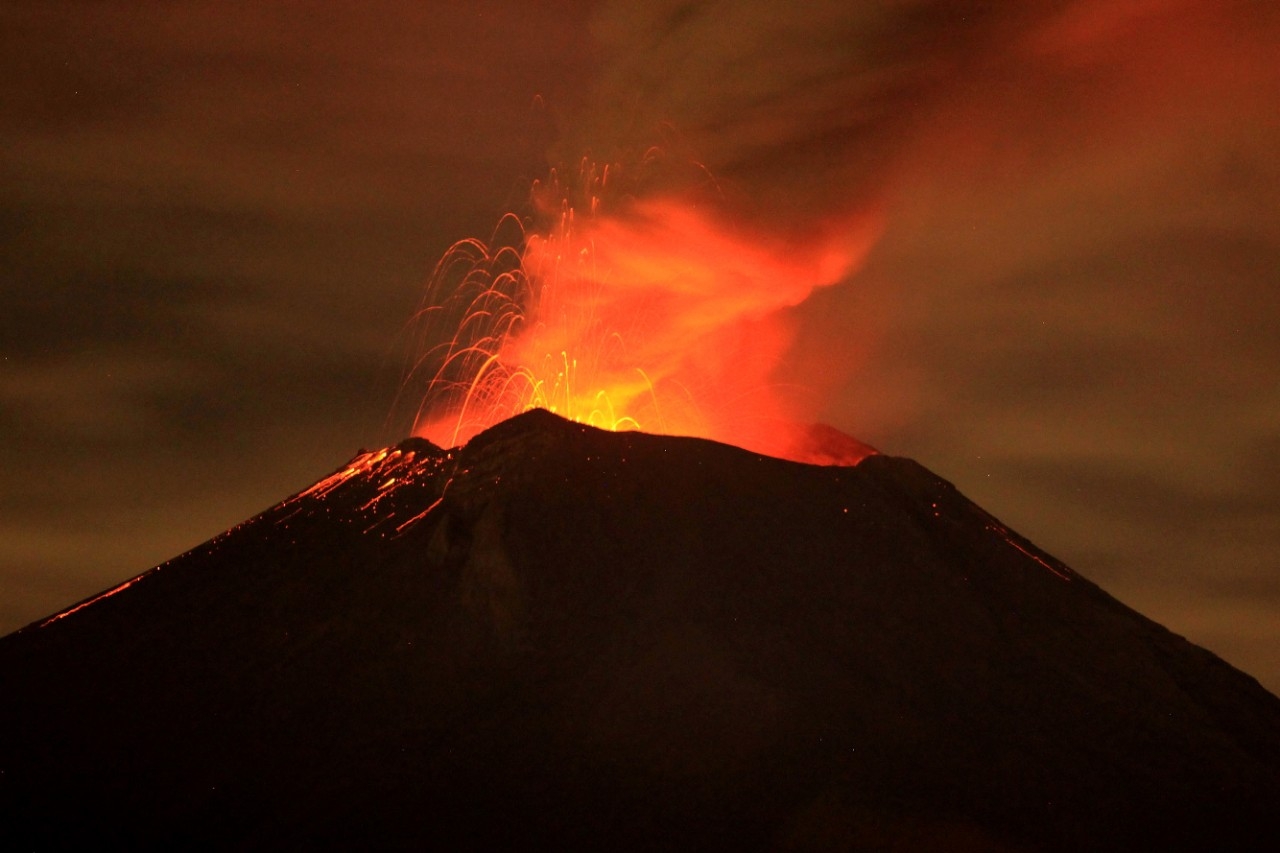
On Dec. 15, 1989, a KLM jumbo jet with 245 people onboard was nearing Anchorage International Airport for a refueling stop on its way to Tokyo. As it approached, the 747 encountered a massive problem: ash from the eruption of Mount Redoubt caused all four of its engines to fail.
“We are descending now, we are in a fall!” one of the pilots said, as captured in a cockpit recording.
The plane plummeted more than 10,000 feet before two of the engines restarted. The pilots landed safely using a visual approach, despite the windscreen being nearly impossible to see through because it had been blasted by ash.
The incident completely changed how pilots and air traffic controllers navigate around the threat of volcanic ash plumes.
“All resources were poured into this eruption to try to mitigate these kind of encounters,” said Game McGimsey, a volcanologist with the Alaska Volcano Observatory (AVO), part of the U.S. Geological Survey.
What is now Ted Stevens Anchorage International Airport is one of the busiest airports in terms of cargo volume in the world. Moreover, because of its location, the airspace above the airport is tremendously busy. These factors – combined with the fact that Alaska has 53 active volcanoes – make it a critical place for the AVO to monitor.
“Although we don’t have the people and the infrastructure or as much at risk as some other parts of the world or the country, we have an enormous amount of air traffic,” McGimsey explained.
Today, AVO works alongside air traffic control to ensure planes stay far away from ash plumes. They use radar to monitor the position of ash and track its growth. The heightened awareness of the dangers of ash plumes is what caused much of European airspace to close during the 2010 eruption of Icelandic volcano Eyjafjallajokull.
“Our job is to keep those airplanes and that ash from coming together. It’s just paramount,” McGimsey said.
Mount Redoubt’s eruption lasted about five months between December 1989 and April 1990. It erupted again in 2009, but has since been quiet in terms of activity.
The Tennessee Valley Authority is demonstrating the real-world value of the Tecnam P2012 Special Mission Platform (SMP), which has become a vital tool for monitoring and maintaining its...
The U.S. Federal Aviation Administration has certified the Boeing 737-10, the newest and largest member of the 737 MAX family, paving the way for Boeing [NYSE: BA] to begin customer deliveri...
Bombardier marked the 40th anniversary of its industry-leading Smart Services cost-per-flight-hour programs, which today support more than 1,500 enrolled aircraft and account for over 11 mil...
Textron Aviation has marked a key milestone in the development of the Cessna Citation CJ4 Gen3 with the rollout of the program’s first production aircraft. The achievement brings the next-g...